The Strait of Hormuz in the Perspective of Geopolitical Interpretation
DOI:
https://doi.org/10.69526/qir.v1i1.424Keywords:
Qur’anic Exegesis, Geopolitical Tafsir, Maritime Studies, Strait of Hormuz, Islamic Ethics.Abstract
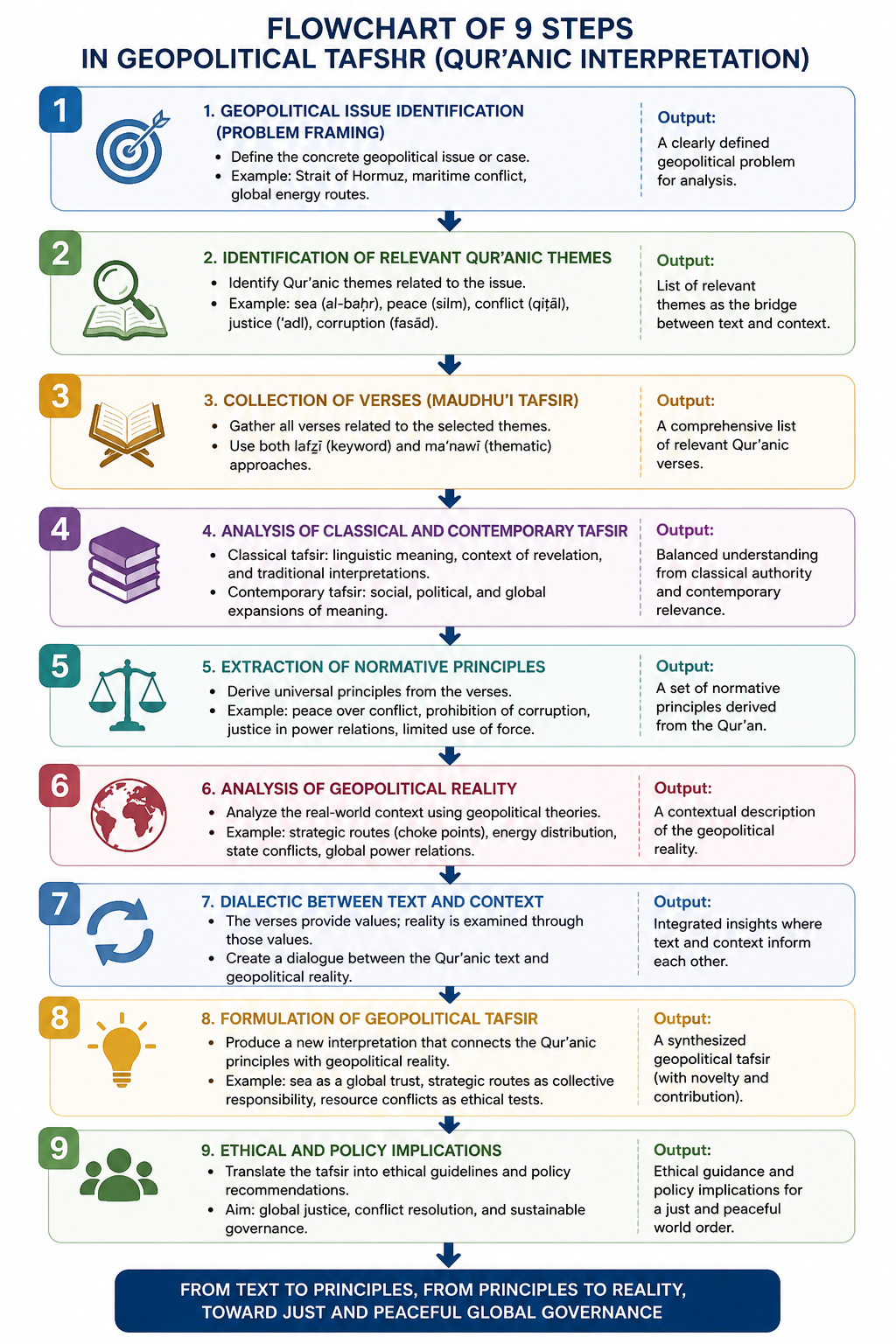
Purpose – This study examines how Al-Qur'an can be interpreted within a contemporary geopolitical framework, particularly in relation to the strategic maritime space of the Strait of Hormuz. It addresses the gap between classical Qur’anic exegesis and modern global issues by proposing a geopolitical tafsir approach that connects scriptural values with real-world maritime dynamics. The main argument is that Qur’anic principles—such as peace, justice, and the prohibition of harm—offer a normative framework for understanding and evaluating geopolitical tensions. Design/methods/approach – This research employs a qualitative thematic (maudhu‘i) tafsir method combined with geopolitical analysis. Relevant Qur’anic verses on the sea, conflict, and social order were systematically collected, analyzed through classical and contemporary tafsir sources, and then interpreted in relation to modern geopolitical theories, particularly maritime choke points and energy distribution systems, with a focus on the Strait of Hormuz. Findings – The study finds that the Qur’an conceptualizes the sea in six integrated dimensions: cosmological, economic, technological, historical, ecological, and eschatological. These dimensions collectively produce normative principles, including prioritization of peace, ethical use of power, and prohibition of systemic harm. Applied to the Strait of Hormuz, these principles highlight the ethical necessity of maintaining stability and avoiding militarization in global maritime routes. Research implications/limitations – The study is limited by its interpretive nature and reliance on selected thematic verses, which may affect generalizability. Additionally, the geopolitical application remains normative rather than predictive. Originality/value – This study introduces “geopolitical tafsir” as a novel interdisciplinary framework, positioning the Qur’an as a living ethical reference for global governance and conflict resolution.