Mount Qaf in Classical and Modern Exegesis: An Epistemological Analysis of the Scientific Paradigm in Qur’anic Interpretation
DOI:
https://doi.org/10.69526/qir.v1i1.425Keywords:
Qur’anic Exegesis, Mount Qaf, Tafsir Paradigm, Al-Razi, Ibn 'AshurAbstract
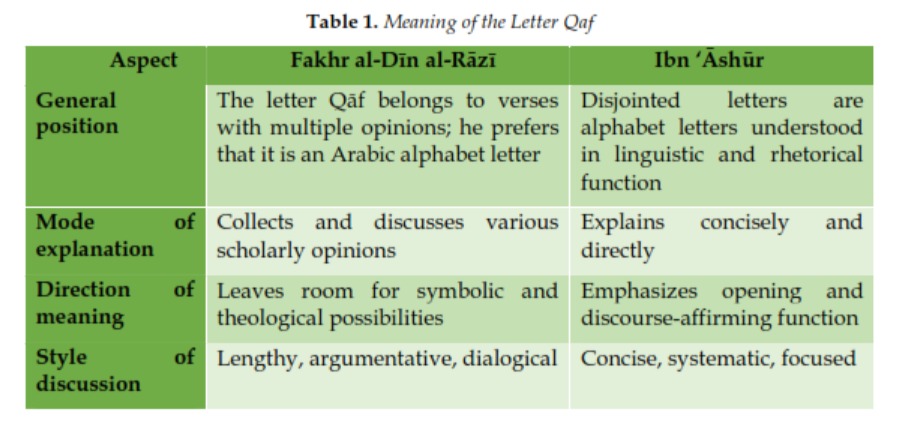
Purpose – Differences between classical and modern interpretations of Qur’anic cosmological verses are often attributed to the development of modern science. However, these differences are rooted in a deeper shift in knowledge paradigms. This study aims to explain this paradigm shift through an analysis of the letter Qaf at the beginning of Surah Qaf, examining how the narrative of Mount Qaf is understood within classical and modern exegetical cosmologies and exploring its epistemological implications for Qur’anic studies. Methods/Approach – This research employs a qualitative library-based approach using descriptive-analytical and comparative–paradigmatic methods. Primary data consist of Mafatih al-Ghayb by Fakhr al-Din al-Razi and al-Tahrir wa al-Tanwir by Ibn ‘Ashur. The analysis compares the argumentative structures of both exegetical works at the level of epistemological assumptions, particularly regarding the authority of transmitted reports, rational inquiry, and the limits of valid knowledge about the cosmos. Findings – The study shows that differences in interpreting the letter Qāf and the narrative of Mount Qāf are not primarily the result of scientific progress but rather stem from changes in standards of knowledge validation and shifting horizons of reality that shape exegetical perspectives. Classical tafsir operates within an epistemology grounded in transmitted tradition and traditional cosmology, whereas modern tafsīr situates scientific rationality as a new interpretive horizon. Implications – These findings highlight the importance of an epistemological approach in tafsir studies, particularly in reading cosmological verses, enabling a more balanced and methodologically grounded dialogue between classical and modern interpretive traditions. Originality/Value – This study reframes the debate from a cosmological true–false dichotomy toward an epistemological analysis of how tafsir operates within different historical knowledge contexts, offering a more proportional framework for engaging both classical and modern exegetical traditions.