Toward an Integrative Paradigm of Maqāṣidī Tafsir: Epistemological and Methodological Insights from Wasfi Ashur Abu Zayd and Abdul Mustaqim
DOI:
https://doi.org/10.69526/qir.v1i1.426Keywords:
Tafsir Maqasidi, Maqasid Al-shari’ah, Methodology of Interpretation, Wasfi Ashur Abu Zayd, Abdul Mustaqim, Contemporary Qur'an StudiesAbstract
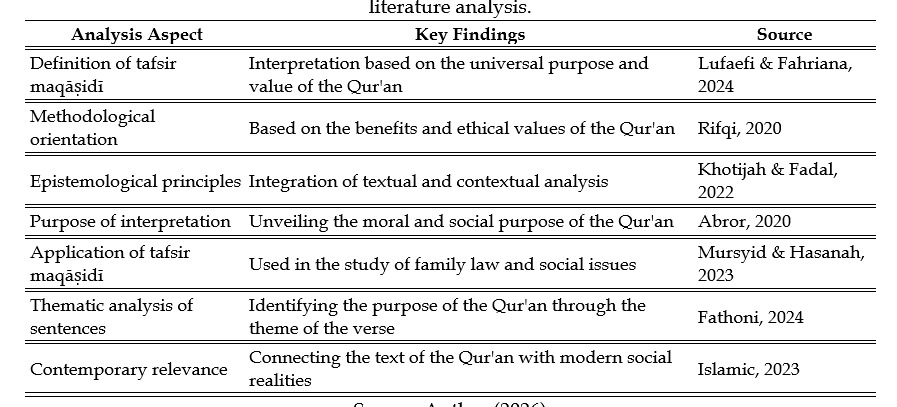
Purpose – This study aims to analyze the paradigm of Maqasidi interpretation in the thought of Wasfi, Ashur Abu Zayd, and Abdul Mustaqim and examine the possibility of methodological integration between the two approaches in the development of contemporary Qur'an interpretation methodologies. Design/methods/approach – This study uses a qualitative research design with a conceptual analysis approach and a literature study. Findings – The results of the study show that the Maqasidi paradigm developed by Wasfi Ashur Abu Zayd emphasizes systematic methodological construction and places maqasid as an epistemological framework in the interpretive process. On the contrary, the approach developed by Abdul Mustaqim emphasizes more contextual, historical, and value transformation dimensions in the social reality of modern society. The findings of the study also show that both approaches have integrative potential because they both place maqasid al-shari'ah as the main foundation in understanding the message of the Qur'an. Research implications/limitations – The implications of this research contribute to the development of the concept of maqāṣidī interpretation as an epistemological paradigm and provide the basis for the development of an analytical model of maqāṣidī interpretation that can be used in future Qur'anic interpretation research. Originality/value – Although the study of Maqasidi tafsir has developed quite widely in the academic literature, research that specifically compares the Maqasidi paradigm between the thought of Wasfi Ashur Abu Zayd and Abdul Mustaqim is still relatively limited.